
Why MrBeast's blindfolded slime clip scored 78/100 on instant mess
November 7, 2026 · 5 min read · By the VidRocket team
The short answer
The video wins by opening on the mess itself instead of explaining the game, so disgust and curiosity hit before the viewer can scroll away.
The original, by the creator on Instagram
See why a creator’s videos go viral. Analyze a creator free →
Why did the creator's Instagram video go viral?
MrBeast and friends sit blindfolded in a row, each pouring thick blue slime over their shoulder into the next person's bowl, reacting with shock and laughter as it spills everywhere.
The video wins by opening on the mess itself instead of explaining the game, so disgust and curiosity hit before the viewer can scroll away.
- 78/100 viral score
- ~5.1 cuts per minute
- 100% face time on screen
- 85% positive sentiment in comments
What was the hook in the creator's video?
"Oh gosh! Dude! Oh, what is this? Ew! What is that?" over MrBeast blindfolded, pouring a huge bin of thick blue slime over his shoulder into the bowl behind him.
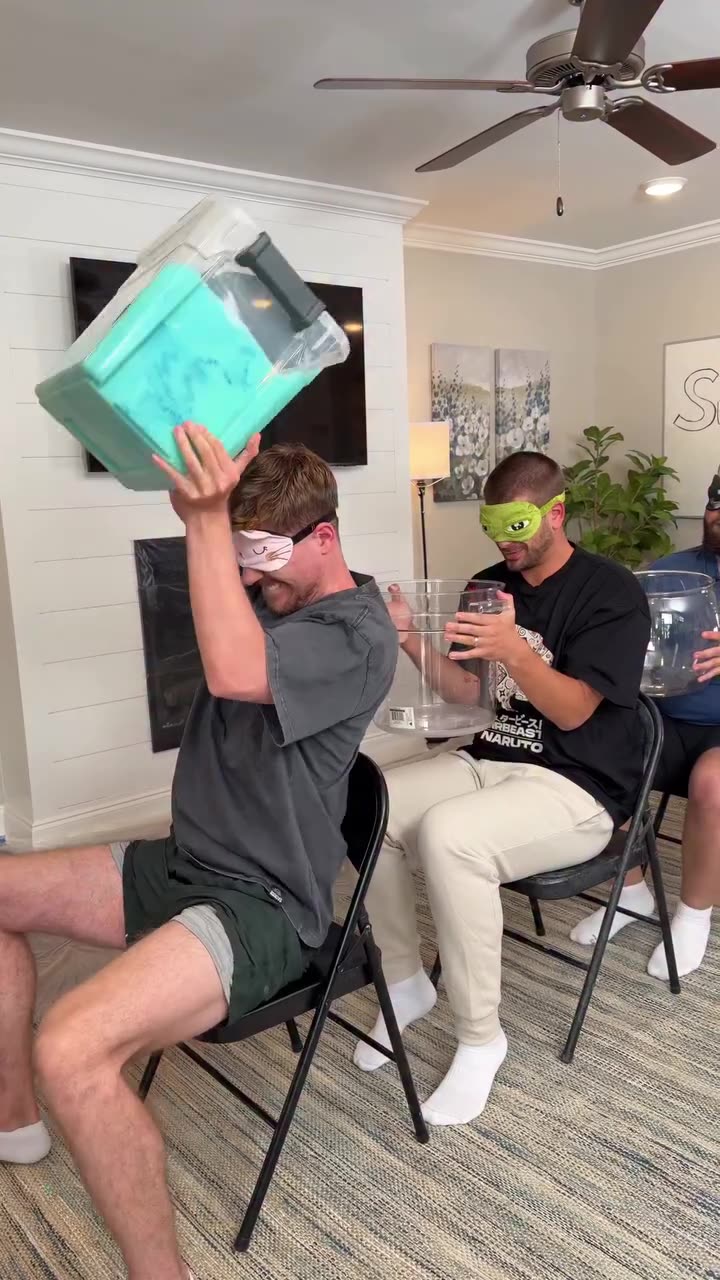
It opens on the payoff, not the rules, so viewers see chaos and mess in frame one and have to watch to find out what's happening and why.
6 things that made it work
1. The video opens on the mess, not the setup
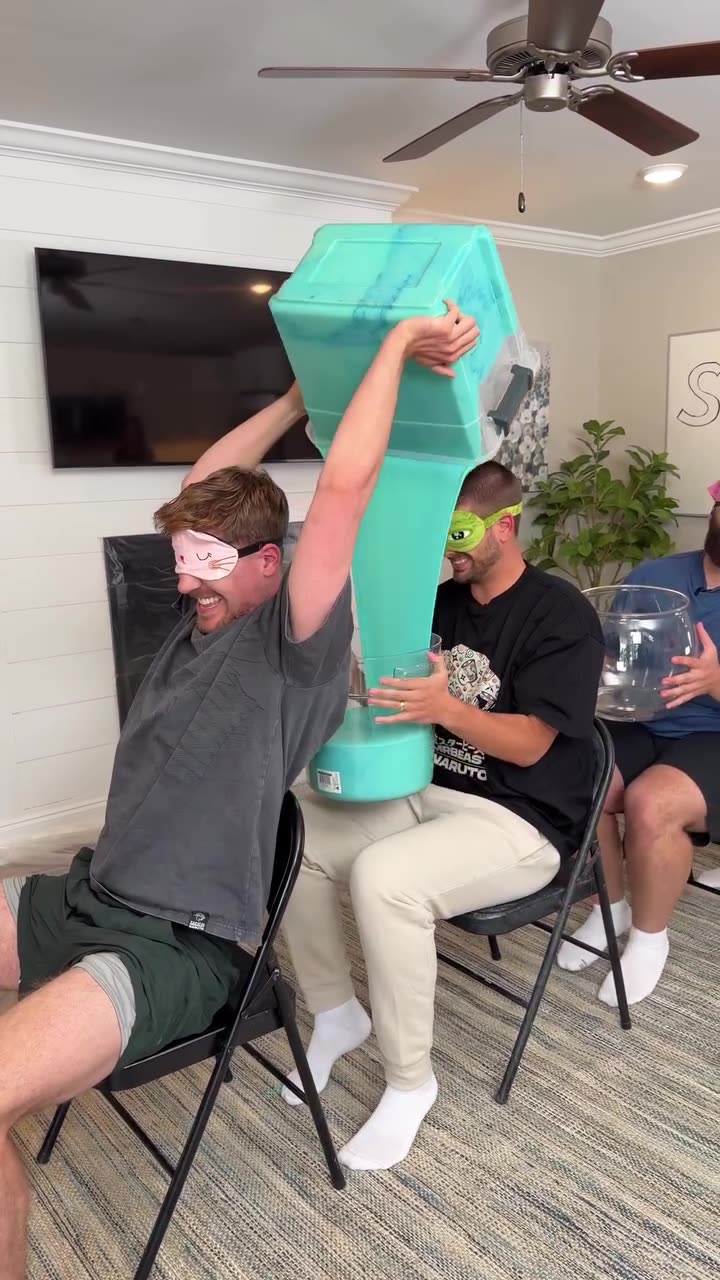
What the creator did (at 0:00): At 0:00 MrBeast is already mid-pour, tipping a giant bin of blue slime over his shoulder, before any rule of the game is explained.
Why it works: Starting at the peak action triggers curiosity (what is this, why is he blindfolded) instead of making viewers sit through setup they might skip.
How to use it: Film your climax or messiest moment first, then let the context fill in as people keep watching.
2. The reactions are left completely unscripted
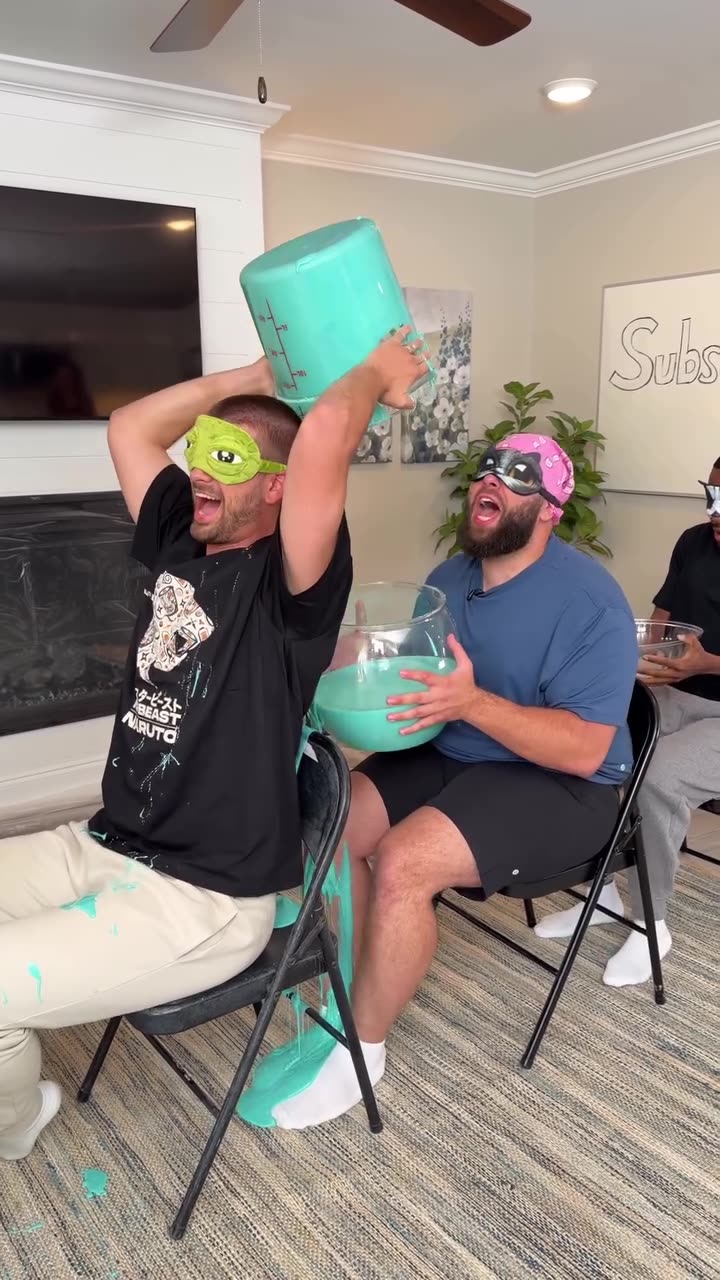
What the creator did (at 0:21): The audio is genuine shouting and confusion ("What is that?", "Is someone dying?") with no voiceover or scripted lines.
Why it works: Unfiltered, high-arousal reactions read as authentic, which makes viewers trust the disgust and laugh along rather than feel sold to.
How to use it: Don't pre-plan reaction lines for a stunt; let the camera run and keep the real exclamations in the edit.
3. Each turn resets the tension like a new round
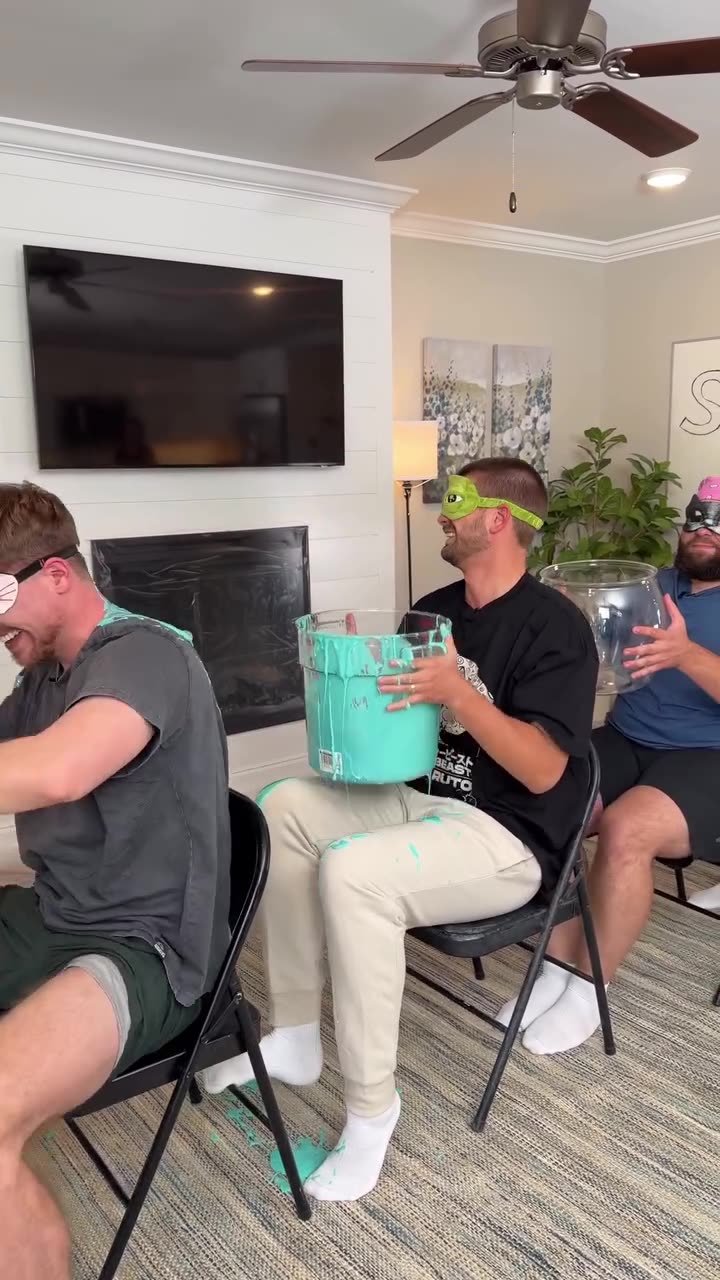
What the creator did (at 0:14): The video is cut into four distinct pours (0:00, 0:14, 0:25, 0:36), each building on the last with a new person and more mess.
Why it works: Repeating a simple structure with rising stakes keeps viewers watching for the next, messier version of what they just saw.
How to use it: Structure a video as repeatable 'rounds' of the same simple action so each cut promises an escalation, not a repeat.
4. The blindfold turns a simple pour into real suspense
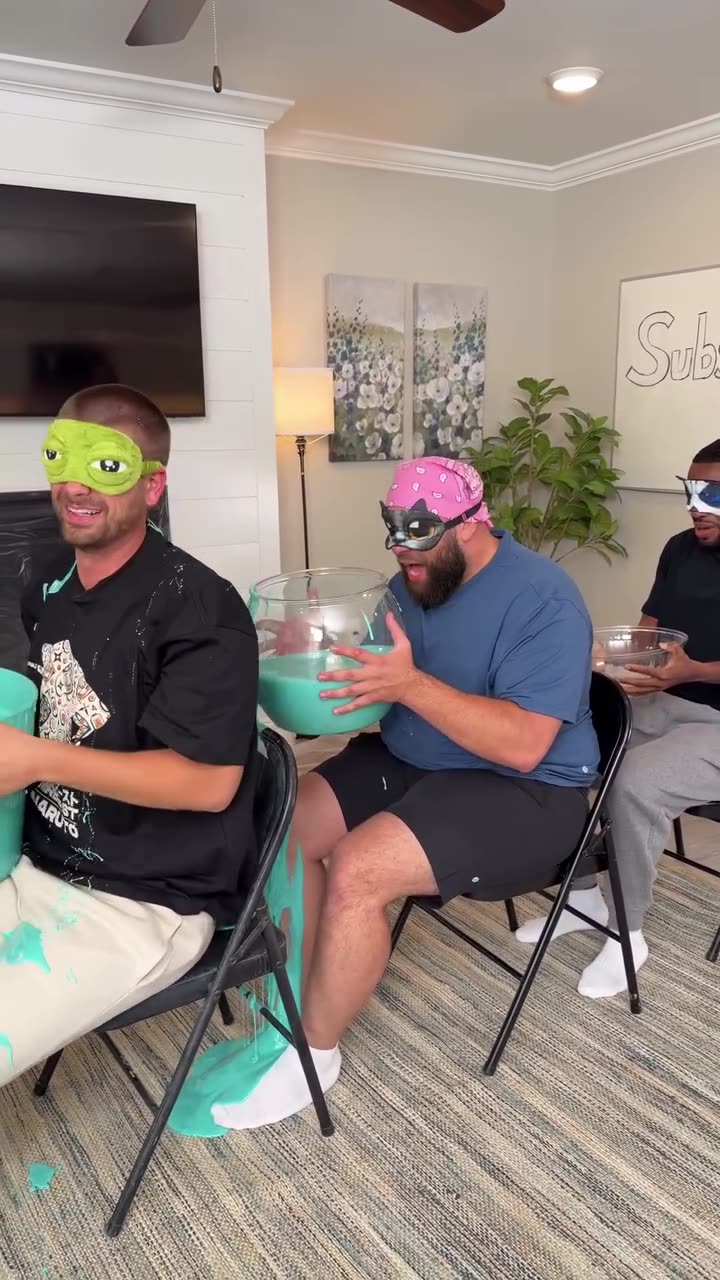
What the creator did (at 0:02): Every participant wears a blindfold while pouring, so neither the pourer nor receiver knows exactly how the slime will land.
Why it works: Removing control from the people on screen creates unpredictability, which is what makes viewers want to watch instead of guess the outcome.
How to use it: Add one simple restriction (blindfold, one hand, time limit) to a basic task to manufacture tension without extra production.
5. The texture and color of the slime does a lot of the work
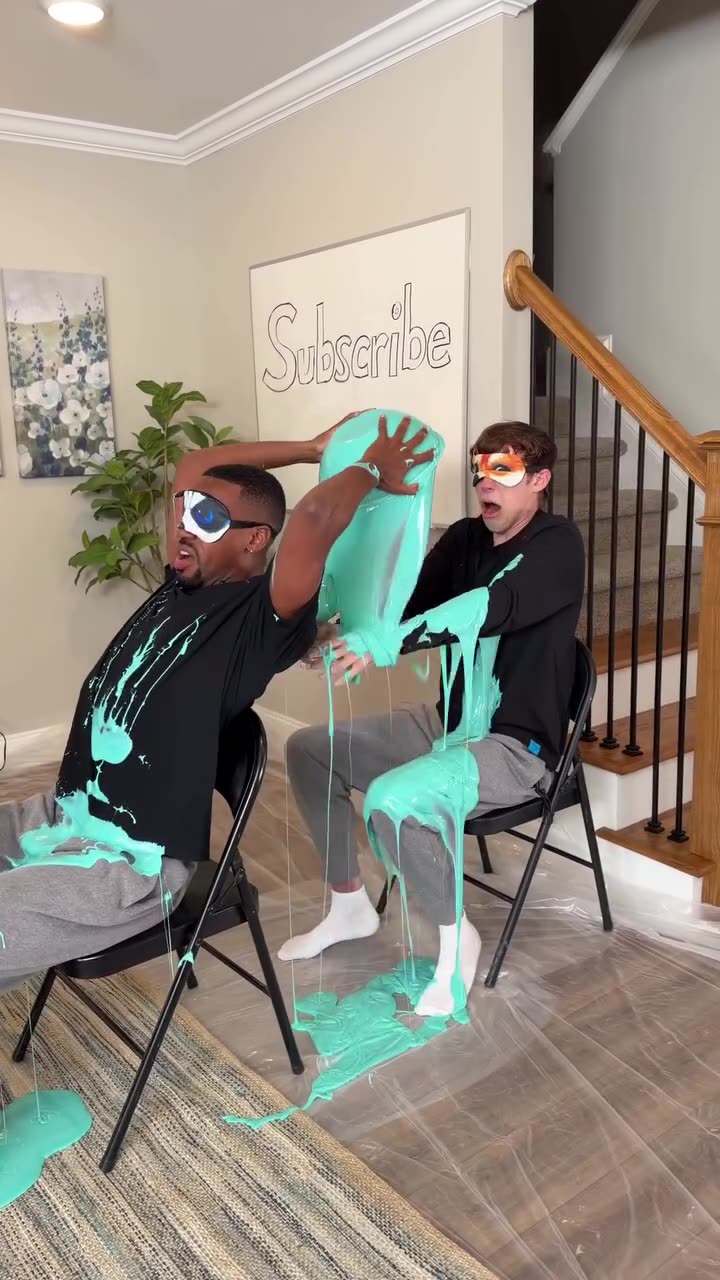
What the creator did (at 0:39): The slime is bright teal and visibly thick and stringy, shot against a plain white and beige room so it pops instantly on screen.
Why it works: High-saturation, high-texture visuals are the kind of 'satisfying/gross' content that triggers an involuntary watch reaction.
How to use it: Pick one visually loud material (bright color, strange texture) and shoot it against a plain background so it reads instantly on a small screen.
6. The final pour is saved as the visual and emotional peak
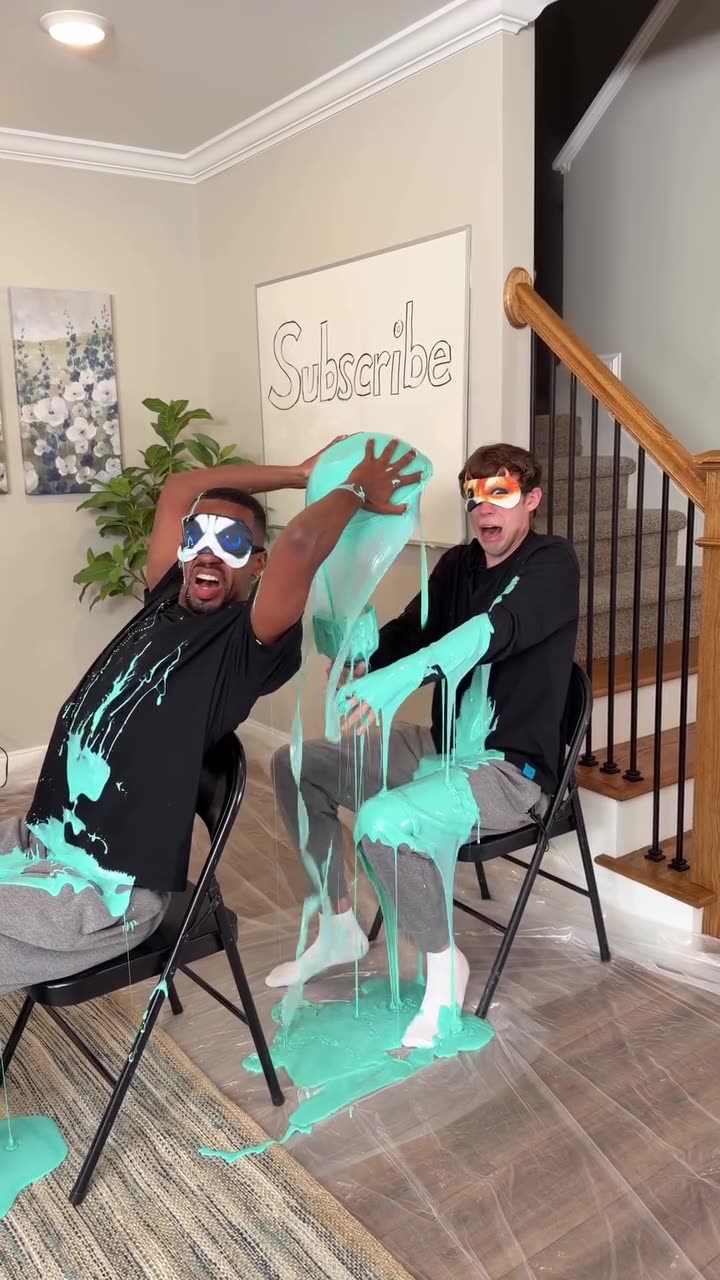
What the creator did (at 0:41): The last participant gets the 'gloopiest' pour at 0:36-0:47, described on camera as 'so gloopy' at the loudest reaction point of the video.
Why it works: Ending on the biggest version of the core action gives viewers a clear payoff instead of trailing off, which supports rewatching.
How to use it: Save your most extreme version of the stunt for last, even if it means holding back your best shot from the opening.
Was it just because they're the creator?
MrBeast's name alone guarantees a high floor of views, but this video's score comes from pacing: four tight rounds with no dead air and a true peak at the end keep watch time higher than a single long, messy stunt would.
How to use this in your own videos
- Film your climax or messiest moment first, then let the context fill in as people keep watching.
- Don't pre-plan reaction lines for a stunt; let the camera run and keep the real exclamations in the edit.
- Structure a video as repeatable 'rounds' of the same simple action so each cut promises an escalation, not a repeat.
- Add one simple restriction (blindfold, one hand, time limit) to a basic task to manufacture tension without extra production.
- Pick one visually loud material (bright color, strange texture) and shoot it against a plain background so it reads instantly on a small screen.
- Save your most extreme version of the stunt for last, even if it means holding back your best shot from the opening.
See every the creator breakdown, from TikTok, Instagram and YouTube, on the the creator page. Watch the original video on Instagram.
Frequently asked questions
How many views did the creator's Instagram video get?
78/100 viral score; ~5.1 cuts per minute; 100% face time on screen.
What was the hook?
It opens with “Oh gosh! Dude! Oh, what is this? Ew! What is that? over MrBeast blindfolded, pouring a huge bin of thick blue slime over his shoulder into the bowl behind him.”. It opens on the payoff, not the rules, so viewers see chaos and mess in frame one and have to watch to find out what's happening and why.
Did it go viral just because the creator is famous?
MrBeast's name alone guarantees a high floor of views, but this video's score comes from pacing: four tight rounds with no dead air and a true peak at the end keep watch time higher than a single long, messy stunt would.
What can I copy from the creator's video?
Film your climax or messiest moment first, then let the context fill in as people keep watching. Don't pre-plan reaction lines for a stunt; let the camera run and keep the real exclamations in the edit. Structure a video as repeatable 'rounds' of the same simple action so each cut promises an escalation, not a repeat.
Try it on your own videos
See why a creator’s videos go viral
Analyze any account’s best and worst videos side by side and get the patterns behind the winners. New accounts start with free credits.